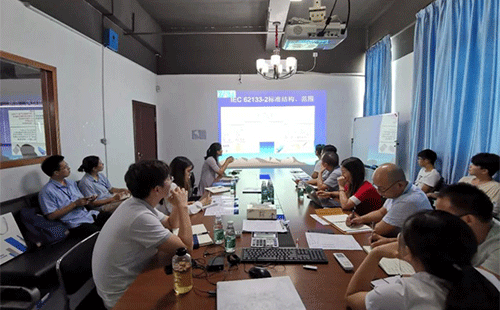
18650 cylindrical batteries, which are widely used in portable electronic devices, new energy storage and other fields, have become the mainstream choice due to their high energy density and standardized structure. The UN38.3 certification, as an internationally recognized safety standard for battery transportation, has built a crucial defense line for the cross-border circulation of such batteries.
UN38.3, the full name of which is Section 38.3 of the United Nations Manual of Tests and Criteria for the Transport of Dangerous Goods, was formulated by the United Nations Economic and Social Council with the aim of regulating the transportation safety of dangerous goods such as lithium batteries. All lithium-containing battery products, including 18650 cylindrical batteries, must comply with the requirements of this standard and obtain certification if transported across borders by air, sea, land or other means.
For 18650 cylindrical batteries, the UN38.3 certification test items cover multiple key dimensions. Among them, the high-altitude simulation test simulates the low-voltage environment in air transportation to ensure that the battery does not have risks such as leakage or explosion under high-altitude conditions. The temperature cycling test verifies the stability of the battery casing and the internal chemical system through extreme alternating high and low temperature tests. Vibration, shock and collision tests simulate the mechanical environment during transportation to detect whether the battery structure can withstand the shock of conventional transportation. In addition, there are short-circuit tests, overcharge tests, forced discharge tests, etc., to comprehensively assess the safety of the battery under abnormal conditions.
For the 18650 cylindrical battery industry, UN38.3 certification serves as a "pass" for products to enter the international market. It not only provides a unified safety assessment standard for the transportation process, reducing trade barriers caused by differences in standards among countries, but also compels manufacturing enterprises to enhance their product quality control capabilities. Through strict testing procedures, enterprises can promptly identify potential defects in battery design or production, thereby optimizing the proportion of electrode materials and improving packaging processes, reducing safety hazards from the source.
Nowadays, with the increasingly frequent global lithium battery trade, UN38.3 certification has become the fundamental guarantee for the compliant circulation of 18650 cylindrical batteries. While promoting the standardized development of the industry, it also adds an important weight to the safety of consumers' use.