With the advantages of lightness, flexibility and high energy density, polymer batteries are widely used in consumer electronics, smart wearables, portable devices and other fields. Their cross-border transportation and market circulation are inseparable from the compliance support of UN38.3 certification. As a special safety testing standard formulated by the United Nations for lithium batteries, UN38.3 certification is the core access certificate for polymer batteries to enter the international air, sea and land transportation systems, and also a key threshold to ensure the safety of the whole transportation process.

UN38.3 certification is not a single testing item, but a comprehensive safety verification designed around actual transportation scenarios, covering a number of core tests such as altitude simulation, temperature cycling, vibration, shock, crush, nail penetration and external short circuit. These tests aim to simulate complex transportation environments such as high-altitude low pressure, extreme temperature difference and road turbulence, investigate potential safety hazards such as thermal runaway, fire and explosion of polymer batteries caused by physical damage and circuit abnormalities, and eliminate transportation risks from the source.
For production and foreign trade enterprises, polymer batteries passing UN38.3 certification is not only a mandatory requirement to meet customs clearance and logistics acceptance of various countries, but also a core means to avoid problems such as cargo detention, customs clearance delay and logistics refusal. Polymer batteries without this certification will not be able to participate in international circulation, but also bring economic losses and brand reputation risks to enterprises.
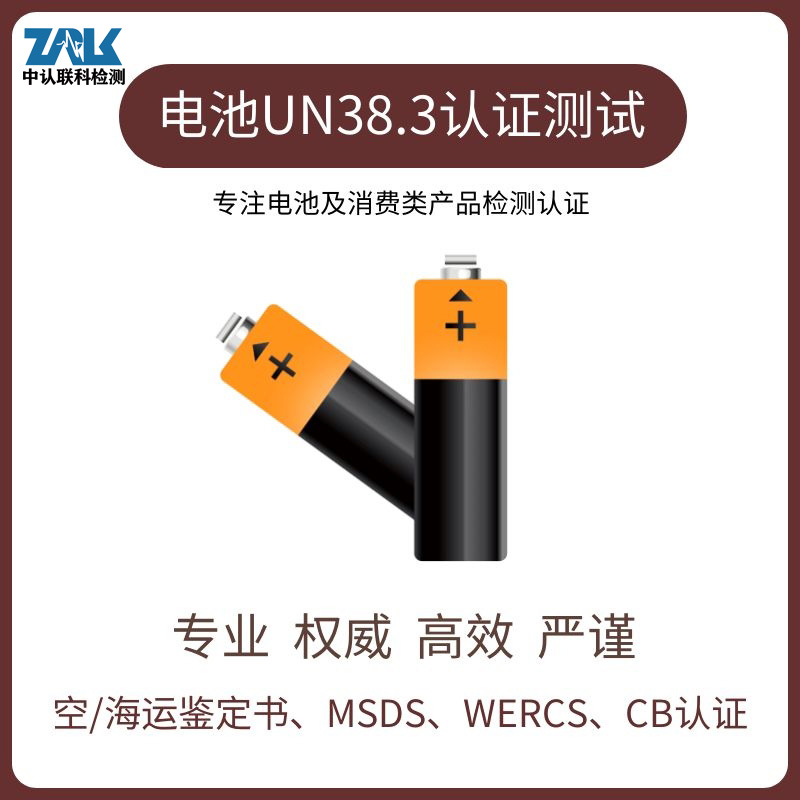
At the same time, UN38.3 certification is also an intuitive reflection of product quality, which can effectively enhance the competitiveness of polymer batteries in overseas markets. When applying for certification, enterprises need to select third-party testing institutions with formal qualifications, strictly complete sample testing and material submission in accordance with standards, and ensure that product design and cell performance comply with safety specifications.
In the current increasingly standardized global lithium battery trade, UN38.3 certification has become a general compliance criterion for the polymer battery industry, which not only protects the safety of cross-border transportation, but also promotes the steady development of the industry towards standardization and high quality.