As early as April 2018, the European Union targeted antimony trioxide, tetrabromobisphenol A, indium phosphide, medium chain chlorinated paraffin, beryllium and its compounds, nickel sulfate and nickel sulfamate, as well as cobalt dichloride and sulfuric acid. Seven hazardous substances including cobalt have conducted public consultations with stakeholders. The consultations lasted for 8 weeks and ended in June 2018. The overall project evaluation lasted 18 months in total.
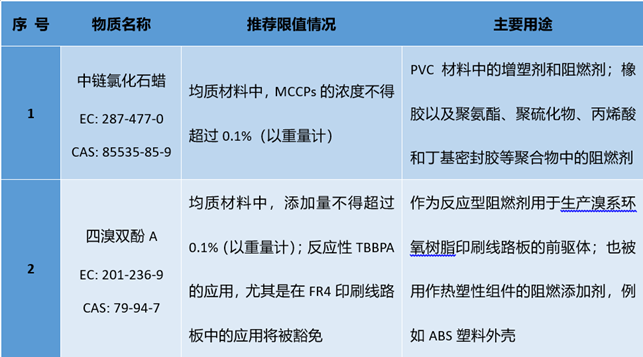
Recently, Oeko-Institut eV released the final evaluation report of Pack 15, recommending that medium chain chlorinated paraffins (MCCPs) and tetrabromobisphenol A (TBBPA) be included in the EU RoHS Directive Annex II restricted substances list. Reasons for recommendation The main reason is that these two substances pose a significant risk of exposure to workers, consumers and the environment. Later, the European Commission will make a final decision with reference to the recommendations in the report.
Details of substances recommended to be added to the restricted list
Five substances including antimony trioxide, indium phosphide, beryllium and their compounds, nickel sulfate and nickel sulfamate, cobalt dichloride and cobalt sulfate are not currently recommended for inclusion in the restricted list. The main reasons are: economic cost considerations , There is no suitable substitute material or the hazardous material will not exist in the product in its original form after processing.
Since antimony trioxide is a synergist of halogenated flame retardants, considering its use and its impact on the environment and health, Oeko recommends joint evaluation with halogenated flame retardants; for beryllium and its compounds, Oeko It is recommended to selectively limit the use of beryllium alloy materials in products such as vacuum cleaners and motor sliding brushes, and it is recommended that manufacturers of electrical and electronic products should voluntarily commit to reduce the use of beryllium in their products so that the content of beryllium in products is less than 1000mg /kg.
Tips:
Once the RoHS controlled substance list is added to the control of MCCPs and TBBPA, it will have a significant impact on electronic and electrical related companies. China Recognition Linktech recommends that relevant companies understand the regulatory requirements of the regulations as soon as possible, formulate management and control plans suitable for their own companies, and determine the content of hazardous substances in products through testing or supply chain investigations to reduce product export risks.