On April 20, 2021, the European Commission issued REACH Regulation (EC) No 1907/2006 Annex XVII item 27 of the latest nickel release test reference standard list (list of harmonized standards).
This list replaces the previous list of reference standards (2017/C 011/02) published in the Official Journal of the European Union (OJEU) on January 13, 2017.
In this update, the method standard EN 12472:2005+A1:2009 for simulating accelerated wear and corrosion of coated articles is updated to EN 12472:2020.
Compared with the 2009 edition, the standard EN 12472:2020 has the following important updates:
1. Change the particulate material used to prepare the abrasive medium to "100% coconut shell" (replace the "coconut, walnut, peanut and almond shell, mixed with a mass ratio of 1:1:1:1")
2. The purity requirement of DL-lactic acid used to prepare corrosive medium has been increased from "above 85%" to "above 88%"
3. The scope of application of the standard: it is clarified that this standard does not apply to articles with nickel-containing outer coatings, and articles placed into punctured ears and other parts of the human body
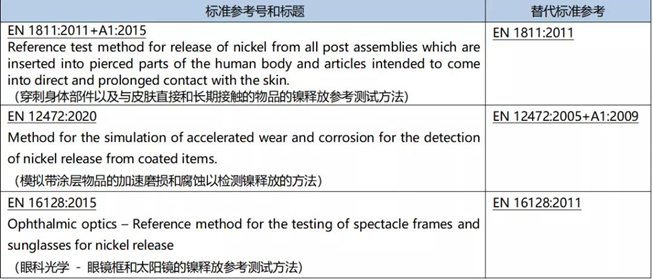
From April 20, 2021, the list of test standards used to prove compliance with the REACH Regulation Annex XVII item 27 nickel release requirements will be as follows:
Tips:
Products notified due to excessive nickel release often appear in the European Union's Rapid Alert System for Non-Food Consumer Goods (RAPEX). The long-term contact with the skin in various products has a higher risk of nickel release. ZRLK recommends that relevant companies should understand and pay attention to the high-risk components in their products to ensure that their products meet the regulatory requirements for nickel release and reduce product export risks.